
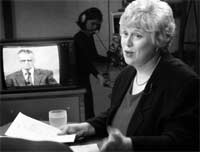

Joan Cartan-Hansen
Reporter, Producer
Idaho Public Television
Going into the 1998 elections, we were hearing the same old thing from politicians. They knew what was important. They decided what to talk about and voters had to make a choice based on the candidates’ agenda.
We decided there was a way to make our election coverage more meaningful. We, in effect, turned the telescope around. A coalition of Idaho’s major daily newspapers, a commercial station and Idaho Public Television polled citizens to find out what issues were truly important to them.
We found out that Idahoans were willing to pay more taxes to fund education and to talk about welfare reform and land use policies. They were interested in far more than politicians had suspected.
We then asked politicians to respond to what citizens thought. We wrote about the poll results. We focused our reporting on the issues voters told us were important. At Idaho Public Television, we hosted a series of debates and used the polling data to shape the questions. With candidates responding to their issues, voters, not candidates, set the agenda. They could make a better choice about whom to vote for.
We also found it attracts viewers and readers. They see that you’re relating to their issues. So it’s not just a lofty goal you’re trying to achieve. It has real, practical benefits.
[ << Back: Sue Deans ] [ Table of Contents ] [ Next: John McCaa >> ]